Final sale reductions Bag a BARGAIN in our clearance page

Get Active This February with Grisport – Your Guide to Getting Moving

Get Active This February with Grisport – Your Guide to Getting Moving

Get Active This February with Grisport – Your Guide to Getting Moving

Man walking outdoors on a trail in winter countryside
Fresh air, steady pace, and the right footwear — that’s the February formula.

February might feel like the tail end of winter, but it’s actually the perfect time to shake off the January sluggishness and commit to getting active. Whether you’re thinking about a fresh start or just looking for a reason to get outdoors, the right footwear can make all the difference. That’s where Grisport comes in.

Why February is Your Moment

January’s gone, the novelty of New Year’s resolutions has settled, and now’s when the real commitment happens. February is quieter, less crowded, and honestly? It’s when people who are serious about moving actually get it done.

The weather’s still chilly, but that’s no excuse — it’s just an opportunity to find shoes that work with you, not against you.
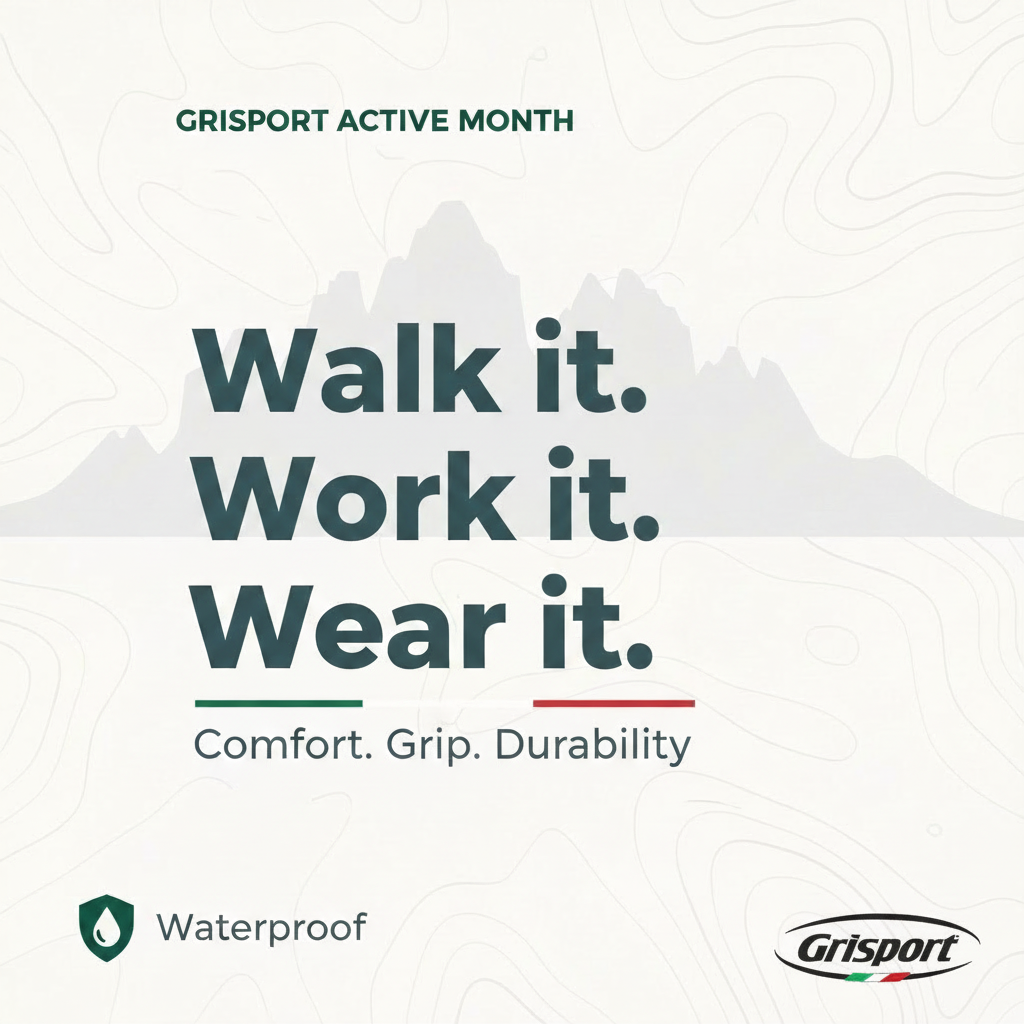
Grisport Active Month graphic: Walk it. Work it. Wear it.
Comfort. Grip. Durability. That’s the whole point.

Meet Grisport’s Active Range

Grisport has built its reputation on one thing: comfort that actually works. Their Active range is designed for people who want to move without compromise. These aren’t just shoes; they’re engineered for real life — walking trails, exploring your neighbourhood, or simply getting from A to B without your feet staging a protest by day’s end.

  • Active Air cushioned technology – helps keep your feet ventilated and fresher on longer walks
  • Anti-shock systems – absorbs impact so your joints don’t have to
  • Lightweight design – easier on the legs when you’re building consistency
  • Water-resistant options – because February weather is unpredictable
  • Cushioned insoles – comfort from the moment you slip them on

The Grisport Airwalker (Navy): Your February Essential

Let’s talk specifics. The Grisport Airwalker in Navy is the kind of shoe that works whether you’re planning a proper walk or you just need something reliable for everyday life.

It’s part of the Grisport Active range and it’s packed with comfort features, including a leather cushioned insole made with Active Air technology (great ventilation to minimise odour and moisture) plus anti-shock systems to absorb impact.

View Grisport Airwalker Navy here

Your Simple February Active Plan

  • Start with walks – 20–30 minutes, a few times a week
  • Invest in proper footwear – bad shoes turn people off walking fast
  • Mix it up – trails one day, town walks the next
  • Make it social – a friend or family member helps it stick
  • Track how you feel – energy, mood, sleep… it all counts

Close-up of winter walking boots in snow
Cold days don’t stop you — uncomfortable footwear does.

Why Grisport Wins

In a world of flashy trainers and trend-chasing brands, Grisport does something simple: it prioritises how shoes actually feel. The Active range isn’t about hype — it’s about comfort, durability, and support that makes you want to get out again tomorrow.

Ready to Get Moving?

February’s your window. The Grisport Airwalker and the rest of the Active range are waiting at Gormley Shoes.

Get active this February. Get Grisport.

Read more

Rates Debate

Rates Debate

1. The Logic of "Rental Value" over "Profit Margin"

The fundamental principle of UK business rates is the Rateable Value (RV). This is an estimate of what the property would fetch in rent on the open market on a specific date. Crucially, the system assesses the building, not the business.

While it may seem unfair that a high-margin drapery department on the first floor is taxed less than a low-margin grocery section on the ground floor, the Valuation Office Agency (VOA) argues that a "hypothetical tenant" would always pay more for the ground floor. This is because the ground floor offers:

Ease of access: No reliance on lifts or escalators.

Visibility: Better frontage and window display potential.

Footfall: Natural flow for the highest number of customers.

2. Zoning and the "Lower Floor" Discount

Valuers use a method called Zoning. The space closest to the front door (Zone A) is the most expensive. As you move deeper into the store, or move up to a first floor, the "value" of that square footage drops significantly.

By the time a customer reaches the first floor, the "retail utility" has diminished so much that the rental value often matches that of a standard office or a storage warehouse. Consequently, the first floor is frequently categorised alongside "Offices" or "Staff Rooms" because, in the eyes of a landlord, that space is interchangeable with any other secondary-use room.

3. The Definition of "Fairness"

The question of whether this system is fair depends on one’s economic perspective:

The Case for Fairness: The system is consistent. It ensures that if Asda moved out and a call centre moved in, the rates would remain relatively stable because the physical characteristics of the building haven't changed. It prevents the government from "taxing success" (i.e., taxing a business more just because they are good at selling clothes).

The Case for Unfairness: The system creates a "Big Box" loophole. Large supermarkets can house vast, profitable departments in areas of the building that are taxed at "warehouse" or "office" rates. Meanwhile, a small high-street shop pays "Zone A" rates on almost 100% of its floor space, as they have no "back-of-house" or upper-floor space to offset the costs.

4. Legal Strategy vs. Tax Evasion

It is entirely legal for retailers to challenge their valuations to ensure as much space as possible is classified in lower-value categories. This is a standard part of "rating surveys." If a first floor is used for a mix of management offices, stock storage, and a small cafe, a surveyor will argue that the entire floor's primary character is "ancillary" to the main retail operation on the ground floor.

Conclusion

The classification of a first-floor retail space as an "office" is a byproduct of a property tax system that is over 400 years old in its logic. It prioritises the physical accessibility of a space over the commercial activity happening within it. While this allows supermarkets to lower their tax burden on higher-margin goods sold upstairs, it remains the legal standard in the UK—a system that values "bricks and mortar" over "pounds and pence.

The current Rate reevaluation shouldn't be paused! There needs to be a fundamental rethink on how it works. And big business should not be able to circumvent the system.

Read more

The Essential Guide to Storing Your Shoes: Why Proper Storage Matters

The Essential Guide to Storing Your Shoes: Why Proper Storage Matters

The Essential Guide to Storing Your Shoes: Why Proper Storage Matters

Published on Gormley Shoes | Expert Shoe Care Tips

When you invest in quality footwear from brands like Rieker, Remonte, and Waldläufer, you're investing in comfort and durability. But here's the thing – proper storage is just as important as the shoes themselves. Whether you're rotating seasonal styles or keeping your everyday favourites in top condition, how you store your shoes can make all the difference in their lifespan and performance.

Why Shoe Storage Matters (Especially for Seasonal Items)

Your shoes are constantly exposed to moisture, dust, and temperature changes when worn. Once you take them off, they need a safe space to recover and stay protected. This is especially critical for seasonal footwear – those beautiful summer sandals and winter boots that sit unused for months need proper care to stay fresh and ready when the season rolls around again.

Here's what happens without proper storage:

  • Moisture gets trapped inside, causing odour and mould
  • Dust and dirt accumulate, damaging the material
  • Temperature fluctuations warp the shape
  • Leather cracks and dries out
  • Colours fade from light exposure
  • Zippers and fasteners corrode

The Seasonal Storage Challenge

If you're like most people, you have shoes for every season. Summer trainers, winter boots, spring sandals – they all need somewhere to live when they're not being worn. Cramming them into a crowded closet or leaving them scattered around isn't just messy; it's damaging your investment.

Seasonal shoes spend months in storage, which means they need extra protection from:

  • Humidity and moisture
  • Dust and pests
  • Light damage
  • Pressure from other items

The Smart Storage Solution

Under-bed storage is one of the best-kept secrets for shoe organisation. It's:

  • Space-efficient – maximises unused space
  • Climate-controlled – protects from temperature swings
  • Dust-free – keeps shoes clean and fresh
  • Accessible – easy to find what you need when season changes

We recommend using quality under-bed storage solutions that are specifically designed for shoe protection. Look for options with:

  • Breathable fabric (prevents moisture buildup)
  • Compartments (keeps shoes organised)
  • Sturdy construction (protects from crushing)
  • Easy access (no wrestling with boxes)

Our Storage Tips for Maximum Shoe Life

Before Storing:

  1. Clean your shoes thoroughly – remove dirt and debris
  2. Let them dry completely (moisture is the enemy)
  3. Use shoe trees or stuff with newspaper to maintain shape
  4. Store in a cool, dry place away from direct sunlight

For Seasonal Items Specifically:

  • Store in breathable containers, not sealed plastic
  • Add a moisture absorber (silica gel packets work great)
  • Keep shoes in pairs with their original boxes if possible
  • Label everything so you know what's inside

Rotation Tips:

  • Store off-season shoes in under-bed storage
  • Keep current-season shoes in your main closet
  • Swap them out as seasons change
  • Check stored shoes monthly for any issues

Brand-Specific Storage Care

Different materials need different care:

  • Leather shoes (Rieker, Remonte, Waldläufer) – use shoe trees and store in breathable bags
  • Canvas trainers – ensure completely dry before storing
  • Suede and nubuck – avoid moisture and use protective spray before storage
  • Wide-fit comfort shoes – maintain their shape with proper support while stored

The Bottom Line

Proper shoe storage isn't just about keeping things tidy – it's about protecting your investment. Quality shoes from Gormley Shoes are built to last, and with the right storage habits, they'll stay comfortable and looking great for years to come.

Whether you're storing seasonal items or rotating your everyday shoes, investing in good storage solutions pays for itself by extending the life of your footwear. Your future self (and your feet) will thank you!

Ready to upgrade your shoe storage?

Check out our recommended under-bed storage solutions to keep your seasonal shoes fresh and protected all year round.

© 2026 Gormley Shoes. All rights reserved. | 53 Main Street, Strabane, BT82 8AU

```

Read more

The Lost List: How We Made Our Christmas Short Film

The Lost List: How We Made Our Christmas Short Film


The Lost List: How We Made Our Christmas Short Film

Where the Idea Began

A few weeks before Christmas, we started wondering if a small shop like ours could make something with the heart of a John Lewis ad—without the agency, the budget, or the London boardroom. Every year, the retail behemoths roll out their blockbusters, buying up prime-time TV slots for hundreds of thousands, hiring celebrity narrators, and flooding every channel with their message. The odds are stacked: a handful of mega-brands with unfair advantages, and the rest of us trying to be heard from the high street.

But social media has started to level the playing field. For once, a good story can travel as far as a big budget—if it connects. That’s where our idea began: tell a story about kindness, community, and something warm for mum, and see if it could reach beyond our four walls.

From Scribble to Story

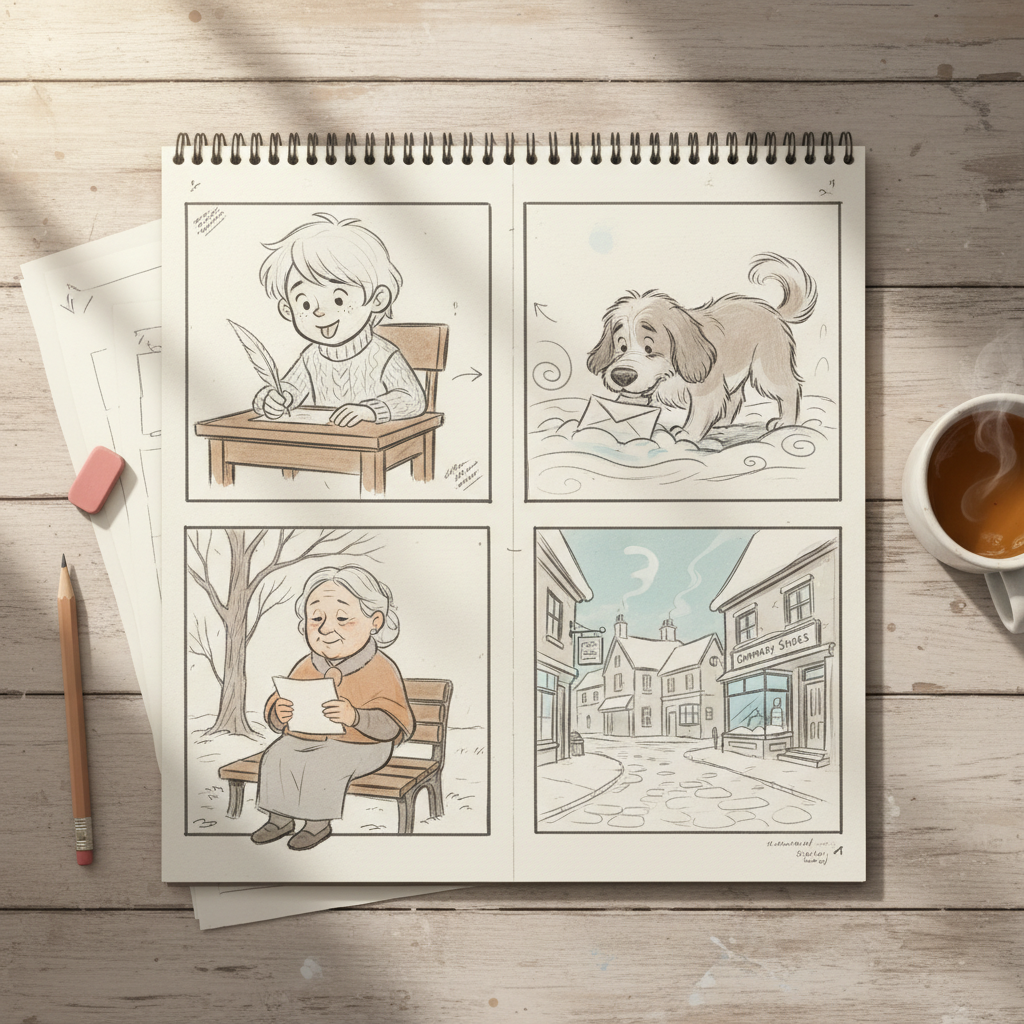
We began with a rough story: a boy, a lost letter, a kind dog, a stranger on a bench, and a Christmas wish. The first step was working out a storyboard—boxes and arrows, stick figures and notes, mapping out each beat from the kitchen table to the snowy street.

Storyboard sketch for The Lost List, showing key scenes and notes on a table

Bringing the Characters to Life

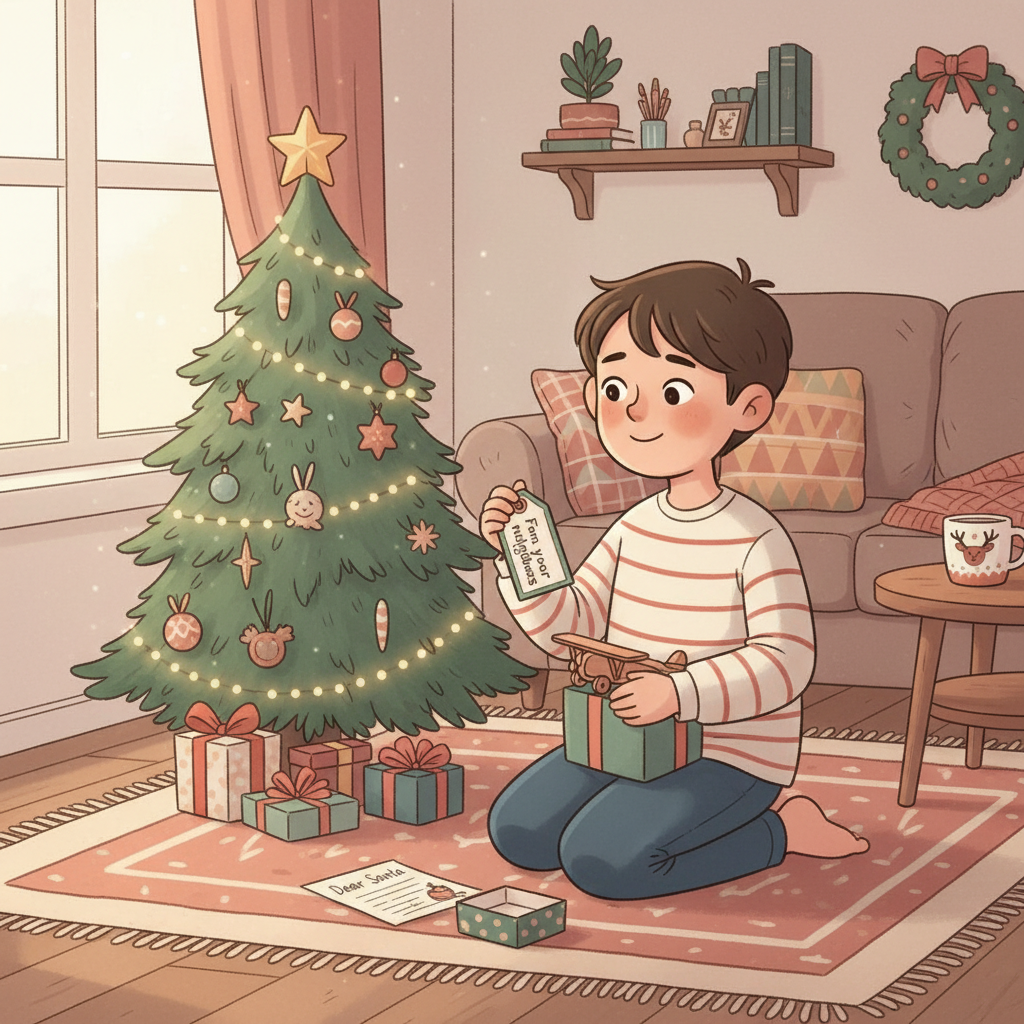
Each character—boy, dog, older woman, postie—needed to feel real, even in a world drawn from scratch. We spent days refining their look using several digital tools, from the boy’s navy coat and berry jumper to the older woman’s green coat and red scarf, making sure every detail stayed consistent across scenes.

Boy opening a present beside the Christmas tree, The Lost List style

Animating the Key Moments

With the story locked, we animated each key sequence:

  • The boy writing his letter
  • The dog finding it in the snow
  • The older woman reading it on the bench
  • The postie delivering kindness
  • The town coming together

Each shot was built and rebuilt suing a lot of trial and error on a digital animator, aiming for a soft, modern storybook feel—minimalist but full of warmth.


Postie reading the lost letter in a snowy town, The Lost List style Older woman in green coat finding the letter on a snowy wall, The Lost List style

Stitching It All Together

Once the scenes were ready, we stitched everything together in a video editor—lining up shots, adding gentle transitions, and making it feel like a real short film. Only then did we write the final script and record the narration (in a hotpress for the best accoustics :')  timing the story so the words and pictures matched.

Tweaks, Reshoots, and the Final Touches

The first cut was 1:45, but we realized the story needed more room to breathe. So we went back, reshot a few scenes, and added new ones to better fit the narrative. We finished by adding music, sound, and the title card: The Lost List.

What We Learned

It was a mix of shoe shop by day, animation studio by night, and a lot of “one more tweak and then we’re done, honestly.” We learned that you don’t need a big budget to tell a story with heart—just some patience, a good cup of tea, and a bit of Christmas magic. Social media gave us a shot at sharing that story, no matter how small our team or modest our means.

If you would like help with your story then get in touch!!


The Lost List premieres Sunday 30th November at 7:30pm on Facebook and Instagram. We hope you’ll join us.


Read more

“Elefanten” Retrospective - Remembering the European kids shoe legend

“Elefanten” Retrospective - Remembering the European kids shoe legend

Elefanten, the Green Boxes, and Why We Said No

We’re starting a little series of Gormley Shoes retrospectives – looking back at some of the brands, stories and characters that have passed through 53 Main Street over the last 30+ years.

First up is a kids’ shoe brand a lot of you will remember with real fondness: Elefanten.

Red Elefanten shop elephant

The world of green and grey boxes

In the early 1990s, we had Elefanten kids’ shoes in the shop – at a time when the children’s shoe market was dominated by one name: Clarks.

Clarks probably had the lion’s share, with Start‑rite (arguably a better product) in second place. Both were old English heritage brands with a reputation for quality and fit, and both mainly marketed their children’s shoes to the people who actually paid for them: the parents.

The shoes themselves were black, brown and, if we’re honest, fairly boring. The boxes were green or grey, with neat little labels for sizes and fittings. Solid, sensible, respectable – exactly what you’d expect to see stacked behind the counter in every high street shoe shop in the UK and Ireland.

Then along comes Elefanten

Elefanten was an unbelievably good kids’ shoe brand from Germany. We didn’t know it at the time – and it wasn’t a word anyone was really using – but what Elefanten did to the UK and Irish kids’ shoe market was disruptive. It didn’t just join the party; it changed the music.

Here was a brand that made unbelievably good shoes, but they were made for the children, not the parents.

  • Soft leathers and proper construction.
  • Bright colours and fun designs.
  • Branding that actually appealed to kids.

The bright coloured boxes with a cartoon elephant became iconic. They gave away little toys, comics, balloons, even sweets with their shoes – and within a few years they’d gained a foothold in the market and were taking serious share.

Elefanten was the trailblazer. It proved kids’ shoes didn’t need to be boring – they could be fun and bright and still fit really well and be superior quality.

People of a certain age will remember Elefanten with great fondness. If you still have a pair in a box in the back of the cupboard with your child’s first teeth, please post a pic – we’d love to see it.

Do any of you remember the big red elephant that used to sit in the middle of the shop? Strange to think that the “kids” who were being fitted for those first Elefanten shoes will now be in their late 20s.

The green boxes fight back

But while Elefanten was riding high in the early 2000s, a green monster was lurking in the wings.

Clarks – the green boxes – was watching those red boxes eat into its market share year after year. Back then Clarks was a cash‑rich company, and it set about a fightback: regain its market share at home and get a foothold in the lucrative European market.

In 2001, Clarks acquired Elefanten for £23 million.

Soon after, we received notification from our suppliers about the acquisition – and that Elefanten would be withdrawn from the UK and Irish markets. Bit by bit, the manufacturing plants in Germany were closed. By 2004, Clarks threw the towel in and folded the company. Only the name survived.

That’s the cynical part: a big, cash‑rich rival buys the disruptive upstart, pulls it out of key markets, winds down the factories, and what’s left is just a logo on a balance sheet.

What came after Elefanten?

We did what independents always do – we adapted.

We took in other European brands like Richter and Ricosta that were similar to Elefanten. We had Studio Bimbi, almost a precursor to Lelli Kelly, making beautiful girls’ shoes and boots in black patent crocs and rich reds and greens with gold embellishments. We brought in premier Spanish kids’ brands, and then kids’ shoes from the big US super brands like Converse, Skechers and Vans. (After Covid we seen a shift in the overall kids market and stopped doing them altogether in 2023.)

But nothing touched Elefanten in terms of the impact it made with us and our customers. For a while, it was the top dog. The Wunderkind that could do no wrong. And it didn’t do anything wrong – other than try to be successful at what it did – only to be taken out by a big‑pocketed rival.

The phone call

And here’s the kicker.

About ten years ago, I got a phone call out of the blue from Clarks asking if we’d be interested in taking in Clarks kids’ shoes.

I politely declined.

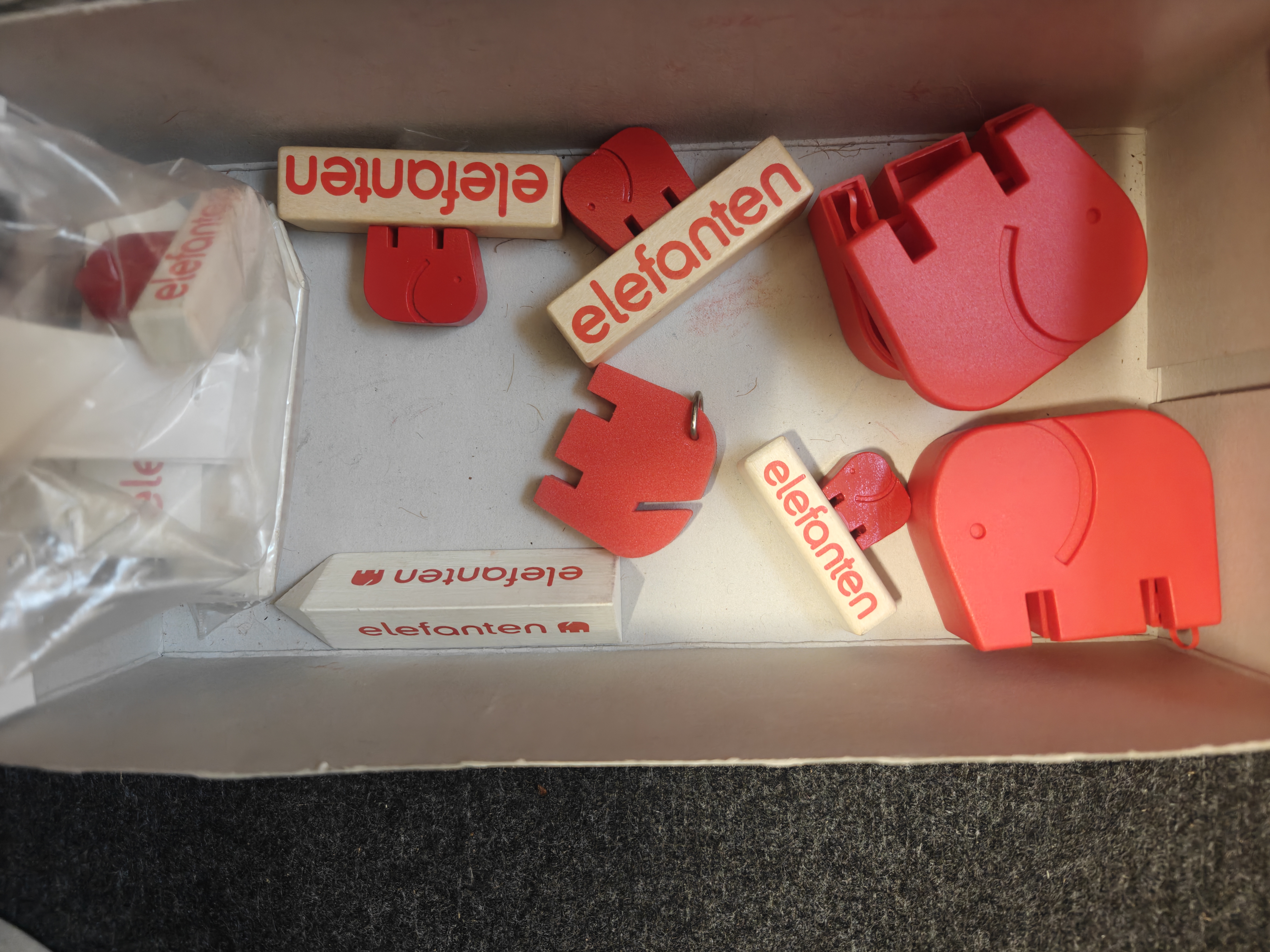
If you remember Elefanten – the red boxes, the toys, the big red elephant in the shop – or if you’ve still got a pair tucked away somewhere, we’d love to see your photos and hear your memories.

Old Elefanten promotional pieces in a box

Gormley Shoes, 53 Main Street, Strabane – since 1994.

Read more